
Not Just a Consultant: How Shared Investment Made RTC’s Upgrade a Success
Joining Today:

Jessica Boucher
Vervint

Bill Mickow
RTC Industries

Ben McClure
Vervint
In this episode of 10,000 Feet, Jessica Boucher sits down with Bill Mickow, VP of IT at RTC Industries, and Ben McClure, Project Manager at Vervint, to talk about what real partnership looks like on a complex, high-stakes ERP upgrade. After 17 years on the same system and a prior attempt that never made it to the finish line, RTC committed to upgrading their Infor LN platform and brought Vervint in to help get it done right. Bill and Ben get candid about how they navigated scope decisions, a go-live date that had to move, and the discipline it took to keep two teams aligned under pressure. The result was a quiet war room, an energized organization, and a business ready to innovate in ways it couldn’t before.

Rather read the recap?
We’ve got you covered.
Upgrading an ERP system is one of the most high-stakes projects an IT team can take on. It touches every corner of the business: finance, warehousing, manufacturing, reporting, and it rarely goes quietly. So when RTC Industries successfully upgraded their Infor LN platform after 17 years on the same version, it was worth sitting down to talk about how they actually pulled it off.
In this episode of 10,000 Feet, host Jessica Boucher spoke with Bill Mickow, VP of IT at RTC Industries, and Ben McClure, Project Manager at Vervint, about what made this project work. Spoiler: it wasn’t just the technology.
The Background: 17 Years on the Same System
RTC had been running Infor LN version FP2 for nearly two decades. Infrastructure was aging out of support, extended support costs were adding up, and the business was hitting a ceiling on what it could innovate. They’d even attempted the upgrade before, about five years prior, but it stalled when other priorities took over.
That prior attempt left a mark. As Bill put it, “There was this feeling of, we’re not confident that we can do this.” Getting this upgrade done wasn’t just a technical milestone. It was about restoring the organization’s confidence that a project like this could succeed.
The goal going in was deliberate and focused: get to Infor LN 10.8, minimize disruption, and leave room to tackle enhancements later. Incremental wins in warehouse processes and financial reporting were on the table, but the real prize was getting current so the business could move forward.
What “Partnership” Actually Looks Like Under Pressure
One of the most candid threads in this conversation is what separated this project from others Bill had been part of. In past implementations, Vervint’s role could have been advisory, showing up with expertise, pointing toward answers, and leaving the execution to the client. That’s not what happened here.
“The Vervint team worked as part of our team as if they were going to be here when we were done — like they were long-term invested in the success of this working, not only for being able to say the project was complete, but that after they left, it was going to work for us.”
-Bill Mickow
“This is the first time where really 100% of the business team had no one dedicated to the project,” Bill said. Everyone was carrying the ERP work on top of their regular jobs. Vervint didn’t just provide guidance; they got in it with the RTC team, helping them stay focused and clearing the path in real time.
A concrete example: on the finance side, RTC needed to restructure how they handled financial reporting dimensions. It was territory the internal team wasn’t deeply familiar with. Sue, a Vervint consultant on the project, stepped in, not just as a technical expert, but as someone who could read the room, understand where the team was uncertain, and build their confidence in the new approach. The technical knowledge was table stakes. The empathy behind how it was delivered is what made it land.
Keeping Scope From Creeping
One of the more honest parts of the conversation was about the constant pull to add things mid-project. When you’re deep in an ERP upgrade and you start to see what the new system can do, it’s tempting to expand. New functionality, better processes, cleaner workflows — the opportunities are real.
Ben described his approach: whenever something new came up, the first question was always what does this mean for the project? Timeline impact, downstream disruption, radius of change across the company — these were the filters. Decisions with a big footprint got deferred. Decisions with contained impact, like some of the finance changes, moved forward after a clear-eyed conversation about tradeoffs.
The structure mattered too. A small steering group made up of Vervint consultants and RTC IT leadership would work through the pros and cons privately, align, and then present a united front to the broader business team. “The business never saw us arguing,” Bill said. That consistency built trust on the business side and kept noise out of the project.
The Go-Live That Actually Went Quietly
The project hit one significant bump: the original holiday-window go-live date had to move. The business got unexpectedly busy, and the team had to replan without losing momentum. Rather than letting the delay become a drift, Ben’s approach was to keep both teams moving on the things within their control and stay tightly connected through the gap.
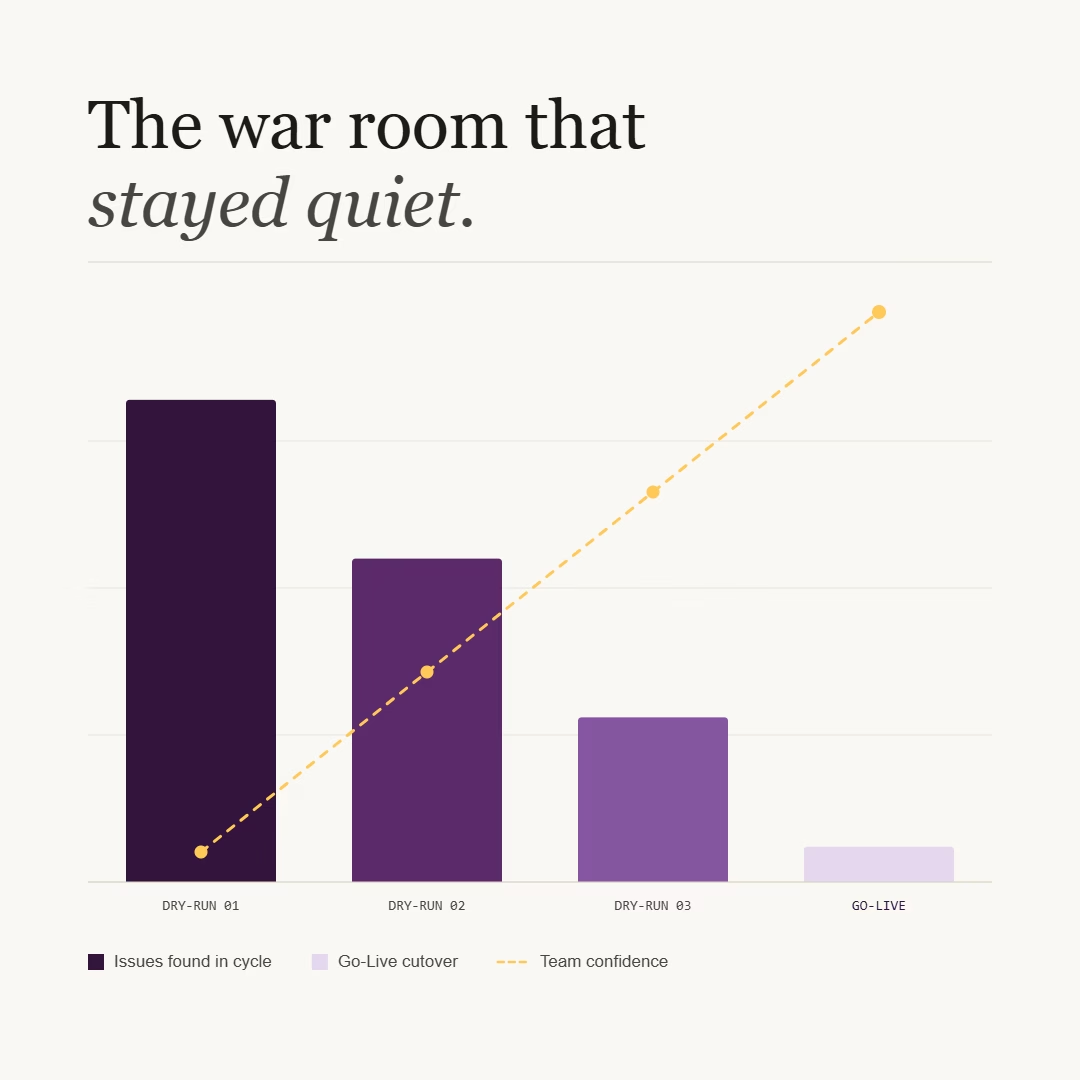
When they did go live, the preparation paid off in a way that surprised even Bill: the war room was quiet. “First experience I’ve had with a very quiet war room,” he said. That quiet came from months of discipline, including multiple full dry-run cycles, checklists that Ben had pushed for even when Bill was skeptical of the detail level, and enough reps in the system that users felt familiar rather than lost when the real day arrived.
“Each time we tested, we found more issues, solved those, and came back a little more confident,” Ben said. The testing cycles weren’t just about catching bugs; they were about building the muscle memory that makes go-lives feel less like a leap of faith.
After Go-Live: Energy, Not Exhaustion
The organization’s response after going live is telling. Rather than the usual post-launch fatigue or cleanup grind, Bill described something closer to a wave of momentum. The project team was recognized at all-hands meetings. People who had been through prior failed attempts expressed genuine surprise at how smoothly things had gone.
End users gained capabilities they’d wanted for years, including running their own reports, accessing data without going through IT, and working with cleaner financial reporting. The warehouse improvements made daily processes faster. And the backlog of “now can we do this?” requests started growing, which Bill framed not as a problem but as a sign of organizational energy.
Even the data migration, which Bill had expected to cause friction, went better than anticipated. Seventeen years of history had to be filtered and condensed. The decisions made about what to carry over and what to leave behind held up. “The stuff we left behind was probably good to have been left behind,” he said.
What to Take Away
Both Bill and Ben were asked directly: what’s the advice for someone about to go through something like this?
Ben’s takeaway was about thinking in terms of radius. An ERP project touches more people and more processes than it looks like from the project team’s vantage point. Underestimating that radius is where things go wrong. Overestimating it, taking the time to map the impact and plan accordingly, is how you avoid surprises.
Bill’s was more personal: these projects don’t have to be painful. The assumption that a hard go-live is inevitable, that there will always be a rough first week, isn’t true, but avoiding it requires the right partner and the right expectations of what that partnership means. “It doesn’t have to be that way,” he said. “You can get it right.”
The thread running through everything in this conversation is that the technology was only part of the equation. What made the RTC upgrade successful was two teams choosing to be genuinely invested in each other’s success, not just in delivering the project, but in making sure it worked long after the consultants went home.
Full Episode Transcript
RTC Podcast Transcript
00:00:00 Jessica Boucher
Welcome to 10,000 Feet, the Vervint Podcast. I’m Jessica Boucher, Vice President of ERP Delivery. Today’s episode is a story about what it actually takes to finish what you started and what happens when the right partnership finally makes that possible. Joining me are Bill Mickow, Vice President of Information Technology at RTC Industries, and Ben McClure, one of our Project Managers here at Vervint. For 17 years, RTC had been running the same version of their Infor LN ERP system. They’d tried to upgrade before and had to walk away. The system was aging out of support, the business was hitting a ceiling on what it could innovate, and the weight of that unfinished chapter was sitting on the organization. When they finally committed to getting it done, they needed more than a consultant they needed a team willing to get in the trenches with them. You’ll hear how Vervint embedded alongside RTC’s team, bridging the gap between system expertise and deep operational knowledge, how disciplined project management kept scope, timeline, and trust intact under real pressure, and how when go-live day finally came, the war room was quiet.
We’re going to start with introducing our guests today. Bill, if you can introduce yourself and then we’ll move onto you, Ben.
00:01:20 Bill Mickow
Sure. Hello. I’m Bill Mickow. I’m the Vice President of Information Technology for RTC Industries.
00:01:29 Ben McClure
I’m Ben McClure. I’m a project manager from Vervint, and I worked with Bill on this implementation.
00:01:36 Jessica Boucher
Great. So thank you both for joining our podcast today. Bill, we’ve been long-term partners. Why don’t you maybe just start by kind of laying the land on what is our overall partnership looks like and some of the higher details of the work we’ve done together?
00:01:54 Bill Mickow
Sure. So RTC and Vervint have been working together for a very long time. I’ve been with RTC three years, but the history between the two companies was started well before I got here. And, you know, my team would often say, hey, you know, we’ve got some great resources at Vervint that we can use for projects. And this latest project was really my first experience and really brought to light a lot of the things that we’re going to talk about today in terms of partnership and working through complex situations together.
00:02:34 Jessica Boucher
Perfect. So let’s talk a little bit about the project and what it meant to your business, some of the key goals or initiatives that we were trying to satisfy. And then then we can talk about really like where we got into the thick of that co-work together.
00:02:51 Bill Mickow
Sure. So we had been running the same version of Infor LN for about 17 years. We were on the FP2 version for those that are LN people. And it had been something that we had wanted to upgrade for some time. We had actually made some attempts in the past to do it on our own. But it was getting to the point where we absolutely needed to do an upgrade. From an IT perspective, many of the infrastructure components were falling out of support. In many cases, I was paying for extended support and incurring additional costs. And so there were some infrastructure things that were really driving the upgrade. But also from a business perspective, we were really limited to how we could innovate given the age of the system. And so it was really important to us that we get through a project where we could implement and move to the 10.8 version.
00:03:58 Jessica Boucher
And what were you say, besides getting to a newer version and some of the technical backend, were the key business drivers or key end user benefits that would be achieved throughout this project.
00:04:15 Bill Mickow
Yeah, so there’s a couple things. Certainly things like user interfaces have changed dramatically, the ability to download directly from screens without having to go and see IT. And so there were some smaller benefits that we absolutely picked up on. We left much of the functionality the same. just so that we could accelerate the project and make sure that we were successful. We did implement some changes in some of the warehouses processes that we improved on, as well as financial reporting. But the main business driver was really around getting to the new version and enabling some things that we wanted to do moving forward. And so this was really core to getting that first step. The business had tried to do this a couple of years before I got here, so probably five years ago, where we tried to do this update on our own. And due to other things coming up, other priorities, they kind of set it aside. So there was this feeling of, we’re not confident that we can do this. And so this project was really important because it it kind of re-energized the team and said, yes, we’re going to do this and we’re going to be successful.
00:05:36 Jessica Boucher
Yeah, and I think you just highlighted a key point, right? That the people in your business who are a part of this project are doing this on top of their day job, on top of, you know, the other priorities within the business or the other overarching initiatives that are running for your business, you know, growth, expansion, quality, all of those things that are super important. And that can be hard for people to try to do all of that at once. That is where I think the project team and the project manager, like Ben, really come in to help guide you through that process and to distill that into achievable successes and achievable ways of working. So Ben, what would you say were some of the… the tactics, the tools, the methodology, et cetera, that you used to help guide the team and work through that project successfully.
00:06:32 Ben McClure
Yeah, I think we used a lot of different tactics, but it starts with really the experience that the team has brought in doing this. Like, Bill, I know you’ve done ERP upgrades and cut overs before. But we would all say like that’s not something we want to do too often in our career because it is such a daunting task. It touches everything in your business and a lot of places it can go wrong. So really like when he said that we try to do that internally, this is a lot of stress on the other side of not having done that before. And so having our team come in and provide that experience helps Number one just gives the guidance on, okay, this is how you do this and this is how you do it safely. So you reduce risk. And so that helps. I think anytime you comment to something like this, we rely a lot on our experience of our teams and I’ve done this before.
00:07:31 Bill Mickow
Yeah, and I would jump in here, Ben, because I think This is the first, I have done this quite a few times, and this is the first time where really 100% of the business team, there was no one dedicated to the project. It was a shared responsibility that they were trying to keep things moving. And one of the things and strengths about the partnership was really the fact that Vervint was able to come in and provide not only telling us what we needed to do, but engage and participate in us in doing those things and helping us to be successful and helping us to focus and pull that time out of our day to be able to do what was important and to make sure that we kept the project on track. And so I think, to the concept of that partnership, the Vervint team came in and really engaged in a way that is very different than what I’ve seen in prior projects from other companies.
00:08:35 Jessica Boucher
Yeah, do you have an example of that, Bill? Like, where was there a time of maybe difficulty or stress or opposing opinions where you really needed the project team to collaborate and come up with a common solution?
00:08:50 Bill Mickow
So we did. we made some changes on the finance side with how we were doing financial reporting and the different dimensions that we were going to do reporting on. It was something that a predecessor had defined and laid out with the earlier version of the attempt to upgrade. And so the business team wasn’t overly familiar with it, but knew they wanted to do it. And so there was this gap of knowledge of how could we do this, what did it really mean? And Sue from the Vervint team jumped in and really performed a couple different roles. One was helping them understand what this new structure would do for them and how it would help them do that reporting. and helping guide them through this process of shifting how we do it today to what it would look like in the future. Without Vervint and that partnership, we wouldn’t have been able to do those changes in the system because we just didn’t know enough about it.
00:10:01 Jessica Boucher
Yeah, I think one of the things that Sue really tries to pride herself on is obviously her system and technical expertise, right? Like that’s a table stakes of this business. What I think I hear you saying is that what sets her apart is the empathy and awareness to know how to deliver that experience to your team who is nervous, maybe burned from prior projects and has competing initiatives and things to work on, right? So it’s that empathy and that partnership that makes your people feel comfortable. telling Sue, yeah, we like this. No, we don’t like that. This isn’t going to work for us or we need this other thing to be solved. Is that, am I hearing what you’re saying? It worked for the team.
00:10:48 Bill Mickow
Yeah, that’s absolutely right and probably better said than I said it, but it really is the Vervint team worked as part of our team as if they were going to be here when we were done and that they were going to be they were long-term invested in the success of this working, not only for being able to say the project was complete, but that after they left, that it was going to work for us and do all the things we expected it to do. And so not only did they do the work and help guide us through how to get it done, but they really validated and worked to validate with the business and with IT that it was going to work for us in the future going forward. And that’s a real, from my experience, that’s a real differentiator in terms of what the team brought to the project.
00:11:46 Jessica Boucher
Great. And what would you say were the key things that we had to get right and that we needed to make sure worked and were successful after the project was delivered?
00:12:00 Bill Mickow
So it’s funny, when I first started talking to Vervint about it, the conversation, and I remember it like it was yesterday, was we’ve got to hit the timeline, we’ve got to hit the budget, and we got to go live. And what the transition from those conversations about all being focused on time and money, those were still important, but it really was how do we go live without impacting the business? We had a very narrow window to go live. And it was really important that we hit the timeline, that we do it in the window that we were given, and that the business would be up and running very quickly. And that was probably the most important thing that we could do. There was a lot of the project management piece that And Ben would tell you that I argued over what we’re doing, and are we doing too much? Are we capturing too much detail? It’ll never be executable. But Ben stuck to his guns, and the checklists, the things that we put together really made that whole go-live process work like clockwork. We hit all our targets. We got signed off very easily. We had the structure in place that really helped us go live. Business was up and running on the Monday. We needed it to be up and running. And we set up a war room for the first week, and it was very quiet. First experience I’ve had with a very quiet war room, especially day one, was very quiet because we had really done everything, dotted all the I’s, crossed all the T’s going into that go-live weekend.
00:13:52 Ben McClure
Yeah. I think a lot of that too, that confidence comes from, we had our reps in, right? We kept testing. We did several cycles of full practice runs of, okay, what does it look like when we go live? And every time, We find more issues, solve those, do it again, find additional. Each time, get a little bit further and a little bit more confident in where we were in the project. So I think those testing cycles and just of getting through that, working together, again, deep collaboration between the two teams to make sure that, okay, not only do we understand what’s new in this system, what’s changed, But I can also, it’s familiar to me when I see it here, I could see it from the way I used to work, right? So even that transition is really important when you go live to make it that quiet go live week.
00:14:51 Jessica Boucher
Yeah, and I think that’s a really great point, right? So that’s a very practical, tangible way to have your users and our team do something in the system that creates trust in the system, trust in the people that they’re working with, maybe a bit of muscle and confidence that when you go live, you either have the right person to go to if you get into a pinch, or that maybe you’ve built enough strength in the system where you can navigate on your own and try to maybe kind of self-service your own answer. So I think that concept of of doing some of that lifting, Ben, in the project and really like building those reps, as you say, is really, really important to, the dynamic of how you work together and how you actually get that system flowing successfully afterwards. I think it’s interesting, Bill, you mentioned some of the key constraints, you know, timeline, go live date, budget. I’m sure that meant that there were times of choice and times where key decisions had to be made or trade-offs had to be made. You know, Ben, maybe you could talk to us a little bit about like how you navigated those types of situations or if there’s a key challenge that you remember of like, hey, this happened during the project. You know, we had some really tenuous conversations. We came to a collective answer and moved forward. I think that would be Great. I’m sure anyone listening to this podcast will be able to be like, yeah, that happened to me. I can remember that type of challenge, but it’d be great to hear how that happened to you both.
00:16:27 Ben McClure
Yeah, for me, it started at the beginning with the clear message from Bill and kind of from RTC that we want this little disruption and it’s close to what we have today. Like they weren’t looking to optimize all the opportunities that are out there in the new system that they could take advantage of. That could come later. And so like kind of setting that tone of we’re going to move first. But along the way, you start to see things that, oh, you know what? This looks like this is a great new functionality that we could use. And that would be really helpful and save us a lot of time. And that’s where but you have to really talk about what that means to the project. And so all of those opportunities that would come to us along the way, it’s like, hey, did you know you could do this way now? Okay, let’s talk about what that means to the project, to the timeline. And so always grounding it into if it’s a decision point that’s going to impact the time frame, or a lot of disruption downstream, a big impact, a big radius of impact across the company, that’s going to be less likely to happen. And so along the way, we got to, we would talk with Bill of what those are. And we did make changes, especially on the finance side, that made sense. And so it’s clear on what that meant. So we talked about the impacts, what the risks were going to be along the way, and that just helped make that decision. And ultimately, Bill and team had to feel good about it. And so as long as we as a project team would call that out and try to help, hey, here’s some things we could look at or they would say, could we do this? Those are discussions. Ultimately, Bill was the decision maker. And that type of structure is very helpful as a project manager because I have that to push against to kind of keep the decisions on the path that we want it to be.
00:18:29 Bill Mickow
Yeah, so Ben, you make it sound like that was all, the RTC folks, but you’re part of this process where Ron and Sue who worked on the project were so engaged was they would see something and they would say, you know what, you really need to look at this. There’s some significant benefit to doing this a different way. And so there were cases where Certainly RTC was coming up with things and saying we wanted to change things, but there were things that the Vervint team came back and said, this is really important and we should talk about it. And so yes, we absolutely did have conversations about. trying to stay true to the mission of, we’re going to get this, we want to be successful, and we’re going to really try and limit scope to be successful. But from both sides, we really looked at some things and we said, but this is really important and we need to consider it. And again, I give a lot of credit to the team working together and talking about those things and making good decisions. about what would get added in and what wouldn’t. So I think that worked really, really well.
00:19:42 Jessica Boucher
And then how did you navigate knowing that we would actually come back to those things afterwards, right? So it can be really easy to defer and put something in a parking lot or just say, this is out, let’s draw a line for the sake of these other factors. But how did you know that we’d eventually get there?
00:19:59 Bill Mickow
Yeah, so that’s a that’s one of the side effects of upgrading and putting, getting current and opening up the window is that there is there’s certainly been a surge in new activity of things that we want to look at that we really couldn’t look at before. implementing IDM, for example, really helped us and gave us some tools that we hadn’t been had before. And so there is a big backlog and a big interest in the company, partially because of the excitement, but also because people are looking at it now and saying, finally, I can get some of these new features I want. We did keep a record of the backlog and the things that we decided to postpone. And so we have that list. And then there’s plenty of other things that are getting added to that list almost every day.
00:20:58 Jessica Boucher
Yeah. And then I think, there’s always times where you go through something and there’s like an unexpected turn or barrier or conflict of prioritization or time. What was that for this project?
00:21:20 Bill Mickow
I think probably the biggest one was we had to shift the go-live date. We were targeting for a Christmas, end of Christmas holiday go live. And it turned out that the company and the business got very, very busy in that period. And so we had to replan and figure out and find the next window that we could use and how we would manage the project over that gap of time. to again, not lose momentum, to be successful, and to make sure that we were ready. And so that was a big effort for us to kind of replan and figure out exactly what the project would look like because of that delay.
00:22:12 Jessica Boucher
So Ben, during that process where we had to replan and shift, how did you maintain that? maintain alignment through the project deliverables, through all of the resources? What was your strategy or your method to managing that?
00:22:25 Ben McClure
Yeah, in this case, like we were still pushing hard to be ready, right, at that date. Like what can we do? What’s in our control to make sure we’re ready for those things? And then in that meantime, make sure nothing else new came in, so staying on track. So we didn’t ever left, even though there was a bit of a delay. We never lost connection. We would just try to stay in tune and support things that were having to happen on both sides of the project to make sure we were moving in the right direction. So again, just lots of coordination, lots of check-ins, just to make sure that we wouldn’t miss the second date that came up. But again, key was not to have a lot of disruption. And so, you know, having And the business needs to weigh in on when that is, and that’s what we worked around.
00:23:21 Jessica Boucher
Yeah, so I think you’ve highlighted a couple of themes over these last few points of maintaining focus and maintaining a clear path through. methodology or collaboration, but how in real practice do you decide when to be flexible and when to be firm and like talk us through those areas of judgment and how you navigate them, either of you. Client or customer side or customer or consulting side?
00:23:53 Bill Mickow
Yeah, I think it was very collaborative. I think that we would bring We had a much smaller team that would really steer the effort, the Vervint team and some people from IT. And we would spend time talking through pros and cons, talking through next steps, and really, in a lot of cases, asking a lot of questions of, okay, what’s the impact of this? Why would I do this? How does this work? But that smaller team would really talk through and really come to consensus that said, here’s how we’re going to approach this and why. And I think that was something that was really successful for us. So I never felt like there was conflict between the two teams because those meetings and those discussions really helped guide us through the rest of the project. And that also helped build the business confidence because they never saw us arguing. We always came from a common front as we were going through, whether it was a system integration test or, some checklists and things that we were always a united front when it came to the project and what we showed to the business.
00:25:22 Ben McClure
Lots of transparency there between the two teams and upwards. So I don’t think there was ever a blind spot to that. So as things were progressing, it was clear where we were and where we were yet needed to go. So I think that was a big part of it. So, you know, if there’s a roadblock that we need to get through, we were in it together to figure out how to get around. And so That was the thing. We were never dictating either way. There was a lot of trust in each other in all sides of the project.
00:25:58 Jessica Boucher
Yeah, and it sounds like in addition to the trust and the collaboration though, Ben, you had a process and a method, and it sounds like even a suite of documents to balance the pros and cons that you were working against. So maybe just elaborate a little bit more on that and what tools you used that helped to drive that discipline or to drive through that process of the risk. I think that would be great to explore a little bit further.
00:26:28 Ben McClure
Yeah, so I think typically for when we do a project like this, we, you know, we have to have a tool that can track this wide range of work. Because again, we’re touching every piece of a business, from finances to manufacturing, all of those things are impacted. And so the IT team, bless them, we used a tool Azure DevOps, and they got a lot of tickets, but they have a lot of detail in each thing. So it was really, once you got into it and understood it, there was a little bit of a learning curve, you could see where everything was. And that was great for the folks that were in the trenches with us. Like we’re in this every day. They know this very well. Once you get outside of that group, it’s less easy to share like, hey, this is we’re going to use this new tool. So we try to go to where they are in that case. So we did have meetings every week with different groups to make sure that, okay, here are you testing? What are you seeing? What process haven’t we uncovered that you haven’t seen in the new system yet? okay, can we do these things? So through weekly meetings, short-term, different groups, making sure that they were all in the system seeing it. So that’s one mechanism is that constant cadence of connection points, making sure that they’re there, and that’s how we collect some of those issues or some of the opportunities that were out there. And then just keeping that. following up, making sure that they’re, keeping up with what they’re, what they’re asked and us the same. And so we’re also always looking at risks, decisions. So every time one of those opportunities come up, we talk about it in our call, weekly calls. Hey, what are we doing here? We’re going forward. Now let’s track what, you know, the impact of that decision along the way. So there was a lot of, a granular kind of tracking of all of those pieces that helped, because it is such a big task, keep it small and these small sections, and we could refer back to those things all the time.
00:28:39 Bill Mickow
Yeah, and that tool, it was very powerful. There was a lot in there. And I think very early on, I felt like, oh, well, everybody can use this and it’ll be great. But what we discovered as we got into the project was It’s a great tool. It was a great tool for IT, but our business wasn’t really, the brains didn’t work that same way. And it was too much detail. And I think the project team and Ben did a lot of work to take the content of that and present it to the business and the people that were on the project in a way that it didn’t seem like there’s 1000 tasks with your name on it that are past due. And you need to make 42 decisions today. And Ben did a really good job of taking that data and information and turning it into something that the business could action. And that was a real strength. The tool was great, but connecting the dots between what was in that tool to what the business needed was something that really helped us be successful.
00:29:58 Jessica Boucher
Yeah. I think that you just described, right, where there’s the perfect balance and blend of tools and technology partnering with a person or a group of people for the right outcome, right? Like you can’t over rely on either of those areas. And, you know, it sounds like this project was a demonstration of the perfect blend of those elements together. I think what I’m also hearing from you, Bill, is that Ben and his role as a PM was viewed like as an equal participant in this project, right? So I think sometimes things can get out of balance, potentially where, you know, your project manager coordinates tasks, but it’s more of an administrative type of flow and all the heavy lifting on the project is done by you as a customer or by the consultant. What I’m hearing is that this was a much more joint and transparent relationship and that the use or the implementation of these tools by Ben significantly helped to drive success and derive positive outcomes in this project. Is that kind of an accurate statement of project management being embedded in this project for you?
00:31:23 Bill Mickow
And so it’s an accurate statement of how it worked on our project. Absolutely. I agree with your categorization that there’s different roles that a project manager can play that range from, I’ll keep track of things and I’ll enter them into the system so that you can go action them to what I think that we had on this project was really more of a project leader than a project manager. And so while part of the role that Ben played was keeping track of things for us and keeping us organized, he was also engaged in helping us get things done that were on that list, helping us make sure that we were working on the right things at the right moment, and helping us to have tools and things that we could use to be successful. And so I think that that, you know, there’s there’s in that gamut of, hey, I’m going to be a note taker to I’m going to lead the effort. We were much more towards the leadership side with the work that Ben did on on our project than than the than than the note taker.
00:32:36 Jessica Boucher
And then Ben, in what way do you think maybe having that toolkit toolkit of of work really helped to create a positive outcome with the project.
00:32:48 Ben McClure
Well, I think the positive outcome is in the people of it. The tool was the thing that helped us, the system to lean against to make sure we were going the right way. But it did take all the people involved to be moving in the same direction. So I guess in that way, the tool helped us do that, right? We could see clear markers of where we were, what wasn’t done. But at the end of the day, it took Bill’s team and the Vervint team to want to go that next step deeper, especially because we have two sets of experts. We have the RTC experts who know everything about their company, know how they work, know what’s required. And we have the LN experts from Vervint who know the system. And when you have things like that, they can often conflict because, hey, this is how it’s supposed to be right out-of-the-box. You use it this way. And so that collaboration of these two experts coming together and saying, we’re going to understand how you work and we’re going to move to you so you can be successful. And I think that’s the main tool that we had was just a clear understanding of RTC and how they worked and all the other stuff. was really helpful, kept the foundation strong, but it really took all those other things, those personal things, the extra effort to kind of make it successful, in my opinion.
00:34:26 Bill Mickow
Yeah, I would just jump in here, Ben, because I’m reliving some of the moments. And, you know, I think you described the two different pieces, the Vervint piece and the RTC piece. And the piece that was different for us on this project that was so important was it wasn’t just the LN experts saying, here’s how it works in LN, but being able to bridge that gap and say, I understand your process. Here’s how the system works. Now let’s put those two together and we’ll help you with making a decision on how it’s going to work for you. right? And that connecting of the dots was something that the Vervint team did countless times to help us to get to the right conclusion and make the right decision. And that’s a big reason why when we went live, things went as smoothly as they did because We had made all those connections of here’s how we do our work at RTC. Here’s how the system is going to support that. Throughout the project, we had made those connections for people. And it wasn’t a surprise to them when we went live. And they got in the system and said, oh, wait a minute. So that was a big part of our success.
00:35:46 Jessica Boucher
So I think we’ve talked quite a lot about the project and the heavy lifting that happened during that. As we now maybe shift a little bit into what happened after Go Live and how the team is doing, how would you say your team reflects on the project, Bill? How is it the upgrade and the usage of the system creating lasting impact in their day-to-day work? And just what’s the sentiment currently as you look back on everything?
00:36:20 Bill Mickow
So I think that this was a huge success for the company. The project team was recognized in a number of all-hands meetings, and we really celebrated the fact that we were able to do this upgrade and be so successful. And as I said before, a lot of people had participated in earlier attempts that weren’t as successful. And so there was kind of this uplifting of the whole organization that we had done this and we had pulled it off and it had gone so smoothly. A lot of people came to me and said, I really expected us to have some issues that first week, but it’s gone really smoothly. And it wasn’t perfect. We had a couple of things. But overall, I think the whole organization was really ecstatic that this went the way it did. And so it was great to celebrate. I think what we’re seeing on the new version, we’re seeing a lot of productivity gains with some of the capabilities that now the end users can do themselves rather than having to come to IT and ask for reports and things like that. On the finance side, much better reporting and the finance team has the different dimensions and ways to look at reports that make them successful. We’ve got some improvements, as I said, in the warehouse that’s making them more efficient in how they do things. And so there are some definite benefits. And again, there’s this list of, okay, now that we’ve done this, how about if we, can we do this and can we do that? And so it’s really, I think, energized the organization to say we can do more and let’s look at the next set of things. And so, you know, I think all those things Overall, the organization really looks back in a very favorable way about how we did this project and how successful we were.
00:38:34 Jessica Boucher
And would you say that there were any unexpected positive outcomes or any things that were accomplished that were like secondary benefits to the project that you weren’t expecting that the team was able to take advantage of?
00:38:52 Bill Mickow
So I think one of the things, so we mentioned we had been on the old version for 17 years and we had 17 years of data in the system. And so one of the things as we migrated data was we built some business rules around taking a much smaller snapshot of the data and migrating it. And so I expected some, some challenges with people losing access to history and to some of the detailed history. And I think, again, I think we made really good choices and decisions there about what needed to be migrated. And so I think the one surprise that I’ve had, probably the biggest surprise, is that hasn’t become a big issue for us, that we migrated a good set of data. And the stuff that we left behind was probably good to have been left behind.
00:39:56 Jessica Boucher
Well, that all sounds great. I think anytime you’re working with that level of data, it can be tough to know when to cut off and what’s still going to be valuable. I think the themes I’m hearing are it went well. People were excited to have a new system at the end. I love the word energized afterwards and recognized that you use. That’s always a great way to have your team feel after our project, right? Especially one that’s difficult. Are there any other takeaways or reflections from either of you that you’d want this podcast audience to hear and have as takeaways?
00:40:45 Ben McClure
I guess for me, it’s just the most important when we’re doing something like this that is so impactful is to understand the radius or the links that this project is going to hit. So it’s not just considering your main project team, you have to really consider everything. And then to me, that’s where you have to be successful is not thinking about that. not thinking about the future, you’re going to end up kind of with a bad with a bad outcome. And so having a partner like RTC that shared that point of view, whether vocalized it or not, but certainly in the way they operate, we were, I think that was the key for us to be successful in this one.
00:41:33 Jessica Boucher
And Bill, maybe a way of asking you something similar is what advice would you give to some organization that’s getting ready to undergo a project of this scale and magnitude? Looking back on it, what’s your takeaway advice for someone else?
00:41:49 Bill Mickow
Yeah, so that’s a tough one. I think that I would say that going into this, I felt like it was going to be a challenge to be successful. And that, prior attempts at doing things like this, there’s always a period of challenge after you go live where things aren’t quite right. And I think the one thing that I learned from this is it doesn’t have to be that way, that you can get it right, that you can dot the I’s and cross the T’s. And you can expect that the partner that you choose to work with, really needs to be a partner and help you through that process and help guarantee you that it’s successful. So I think, this one for me was different than ones that I’ve done in the past. And it was because of the way we work together and shared the passion to get this done correctly. So I guess that’s the advice I would have is that, these projects can be really successful and go really smoothly. if you pick the right team and you set the right expectations for them.
00:43:07 Jessica Boucher
Agreed. Well, this has been a really great conversation and a really thoughtful look at what it really takes to work well together through complex, long-term initiatives. I want to thank both of our guests, Bill and Ben, for sharing their perspective and experience today and for being open on what mattered, how they made it work, how to navigate all of that work, and not just focus on what was delivered, but really how it was delivered, how decisions and partnership really influenced those outcomes, and ultimately how trust and partnership was built along the way. Thank you to our listeners for spending time with us today. If you found this conversation helpful, please be sure to follow Vervint on LinkedIn and keep an eye out for our future episodes of Ten Thousand Feet, the Vervint Podcast.