Making sure every Hot-N-Ready pizza is ready when you are
Projecting demand for a signature Hot-N-Ready product
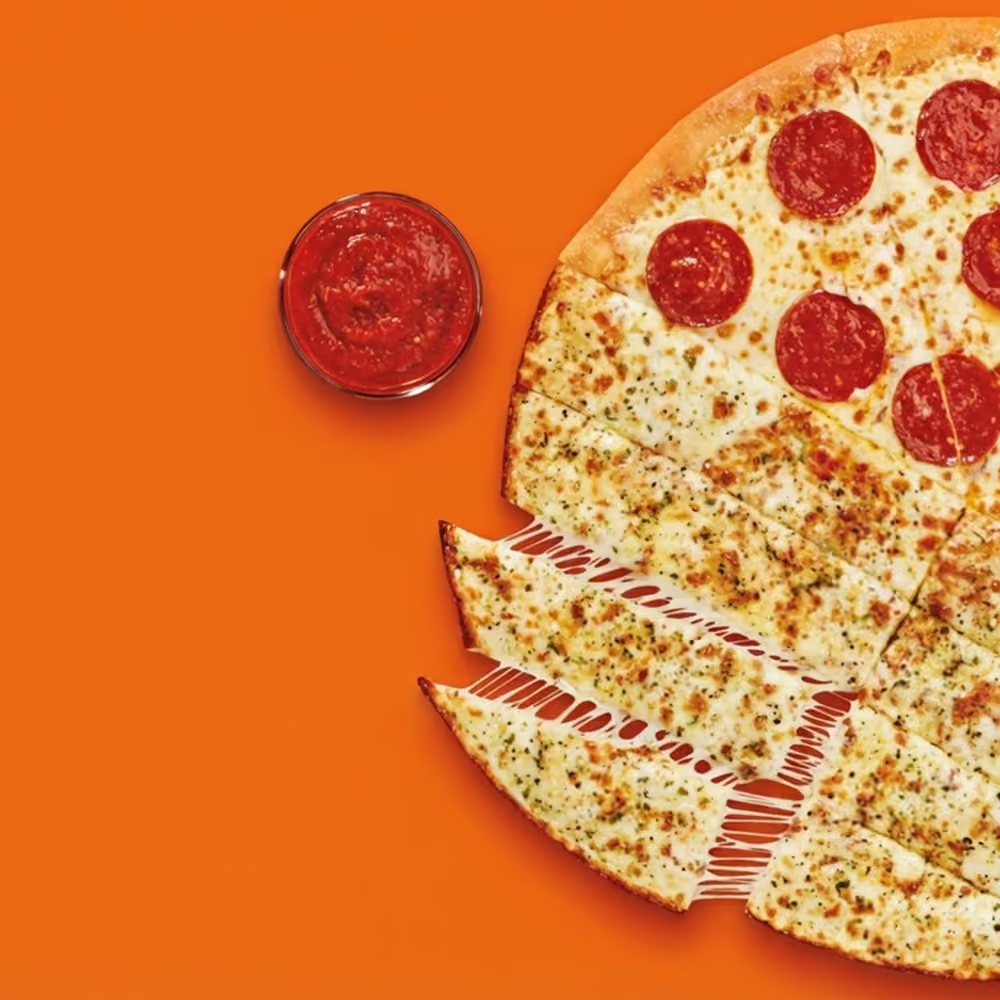
Headquartered in Detroit, Michigan, Little Caesars was founded by Mike and Marian Ilitch in 1959 as a single, family-owned restaurant. Today, Little Caesars is the third largest pizza chain in the world, with stores in every U.S. state, built on a simple promise: a Hot-N-Ready pizza, ready when customers walk in the door.
Little Caesars needed to know how many Hot-N-Ready pizzas to have ready at each store, hour by hour, without running short or making too many, so Vervint worked with Little Caesars and Microsoft to build a machine learning system that predicts demand store by store.
Never run out, never over-make
Predict how many Hot-N-Ready pizzas each store needs, hour by hour, to keep the “ready when you are” promise without waste.
Ground predictions in the real world
Factor in more than historical sales, weather, and local sports schedules that actually shift walk-in demand.
Build a model that keeps learning
Create a system that gets smarter over time by comparing its own projections to actual sales.
Cracking the code on pizza demand
Little Caesars is known for its “Pizza! Pizza!” slogan and its promise to offer walk-in customers a Hot-N-Ready pizza the moment they arrive. But delivering on that promise, without having too few pizzas ready or too many going unsold, is a genuinely hard prediction problem. Little Caesars was already working with Microsoft to explore whether machine learning could accurately predict pizza demand at the store level, and brought Vervint on board to bring that model to life.
Vervint’s team mined existing sales data and identified the primary drivers behind walk-in pizza purchases, then worked with Little Caesars to design a system using machine learning algorithms to generate hourly predictions for Hot-N-Ready sales at every store, grounded in historical sales data plus real-world signals like weather and major league baseball, football, and hockey schedules.
An inference engine that gets smarter over time
Most machine learning models work on a simple pattern: feed in a data point, get back a prediction. Vervint took the technology a step further by adding an inference engine, technology that let Little Caesars weigh multiple data insights per store at once, producing far more accurate, tailored predictions than a single-input model ever could.
Over time, the algorithm gets smarter, comparing its earlier projections to what actually sold and refining itself accordingly. Vervint also designed the full data pipeline behind the scenes, sending sales data to the cloud, integrating and managing it, and pushing it downstream, marking the first time Little Caesars had used this technology at this scale.
With a smarter way to predict demand store by store, Little Caesars is positioned to keep its Hot-N-Ready promise for walk-in customers everywhere, one perfectly timed pizza at a time.